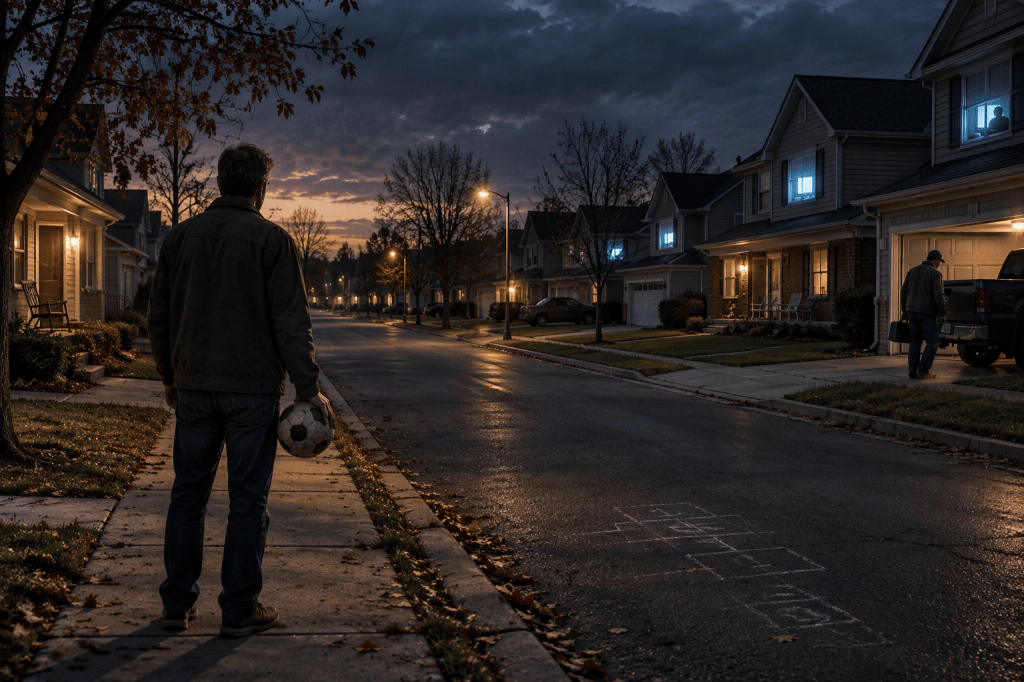
The neighborhood’s gradual descent into silence and isolation reveals the quiet erosion of human connection, foreshadowing a deeper societal fracture.
The Silence in the Neighborhood
The first sign of trouble arrived without announcement. It drifted into the neighborhood like a change in weather, subtle enough to ignore yet persistent enough to unsettle anyone who paid attention. I remember stepping outside one evening and sensing things were changing and not for the better. The human warmth that once flowed through the street with neighborly chit chat and activities began to slow. Houses stood in their usual places, lawns trimmed, cars parked in familiar driveways, yet something essential had thinned. The neighborhood felt like a stage after the actors had left, the props still arranged but the life drained from the scene.
I walked down the sidewalk, listening for the sounds that used to define the rhythm of our days. There had always been children here running, shouting, inventing games that spilled across yards and driveways. Their absence created a strange hollowness. Windows glowed with the cold light of screens, but no faces appeared behind them. The quiet pressed against me with a weight I could not explain. It felt like the beginning of a retreat, a collective turning inward that left the street exposed and vulnerable.
A man I had known for years stepped out of his garage carrying a box of tools. He glanced in my direction, and for a moment I expected the familiar nod, the small gesture that once passed between neighbors as a sign of shared existence. Instead, he lowered his gaze and moved quickly toward his truck. His posture carried a tension that made the air feel brittle. I watched him load the box, close the tailgate, and return inside without a word. The door shut with a soft click that sounded final, as if he had sealed himself away from the world.
The silence deepened as I continued walking. Porch lights flickered on automatically, illuminating empty chairs that had once held conversations. The streetlights cast long shadows across the pavement, stretching toward houses that seemed to recoil from the night. Even the insects sounded muted, their usual chorus reduced to a faint whisper. The neighborhood felt suspended, caught between what it had been and what it was becoming. I sensed a kind of emotional drought settling over the place, draining the vitality that once connected us.
I paused near the corner where children used to gather after school. The patch of grass where they played was untouched. A forgotten soccer ball lay near the curb, faded by sun and rain. Its presence felt strangely accusatory, a reminder of a life that had slipped away without ceremony. I picked it up and held it for a moment, feeling the rough texture beneath my fingers. The ball brought back the memory of laughter, yet the silence around me swallowed that memory whole.
As I stood there, I realized the neighborhood had begun to behave like a wounded organism. Each house withdrew into itself, each family retreating behind closed doors. The connections that once formed the nervous system of the community had weakened. People moved through their routines with the caution of animals sensing danger. The street no longer felt like a shared space; it felt like a boundary between isolated worlds. The withdrawal was not dramatic, yet it carried a profound sense of loss. Something essential had slipped from our grasp, and we had not noticed until it was gone.
I returned home with a heaviness that settled deep in my chest. The silence followed me inside, lingering in the room like a presence that refused to leave. I sat by the window and watched the street grow darker, the houses dimming one by one. The quiet was complete now, a stillness that felt unnatural. It was the kind of silence that precedes a storm, not the kind that brings peace. I sensed that the fracture had already begun with this slow erosion of human connection.
The neighborhood had changed, and I had no words for the change. I only knew that the silence carried a warning. It told me that something vast was shifting beneath the surface of our lives, something that would not be stopped by hope or habit. The fracture was small, almost invisible, yet it carried the weight of a future that none of us were prepared to face.


Leave a Reply