There was the black solitude of the islands,
and there, woman of love, your arms took me in. -Pablo Neruda
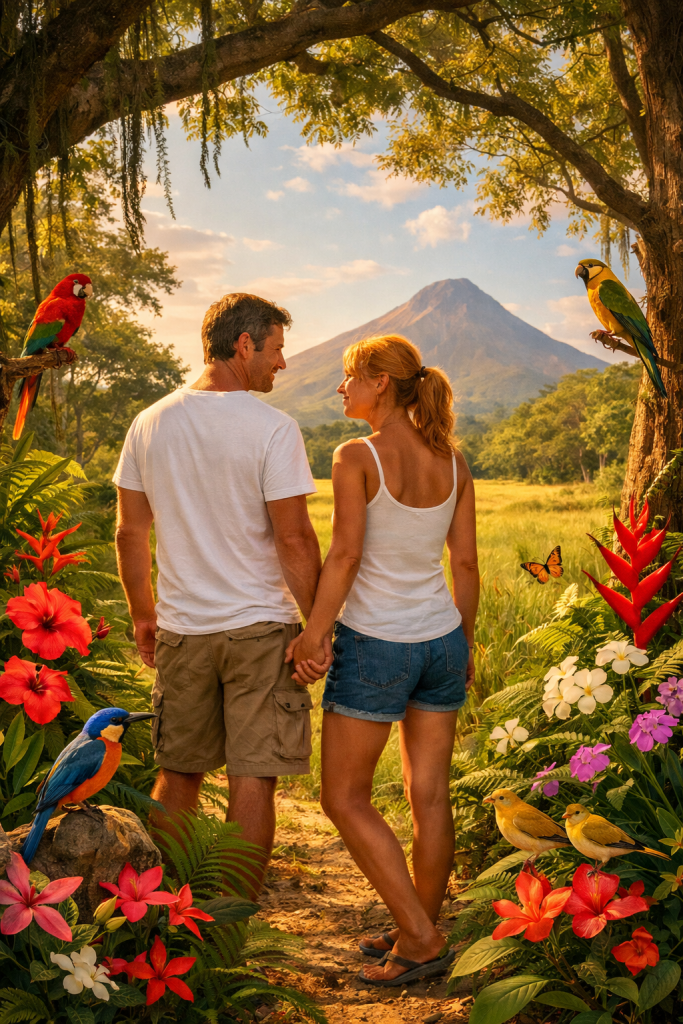
The sea was calm when they rounded the island. The sun had gone down behind it, leaving a faint red smear across the horizon. The wind was soft, steady from the west. The boat moved easily, the sails stowed, and the engine putt-putted along.
Renate pointed ahead. “There,” she said. “That break in the cliffs.”
David nodded. “Looks like a natural harbor.”
They turned toward it. The water deepened, dark and smooth. The cliffs rose high on both sides, sheltering the cove from the wind. When they dropped anchor, the world went still except for the sound of small waves from the sailboat rebounding from the sheer cliffs and tapping the hull.
Renate poured the last of the pear wine. “We could stay here awhile,” she said.
David looked at the island. “If there’s fresh water.”
“Maybe more,” she said. “Wood. Goats. Something to eat.”
He smiled. “You planning to start a colony?”
“Maybe just a hut,” she said. “A garden. A place to come back to.”
They finished the wine and went up on deck one last time before turning in for the night. The stars were coming out, sharp and cold above the dark cliffs. The hidden bay smelled of salt, flinty stone, and wild grass filtering down from the cliffs.
—
Morning came clear and bright. The breakers outside the harbor looked silver. They rowed ashore with a small pack and a canvas bag for anything useful they might find.
Renate stepped onto the sand first. “Feels good,” she said.
David followed. “Untouched.”
They walked inland. The ground rose gently, covered in scrub and low trees. Birds moved through the branches. The air was heavy with the scent of earth and salt.
They found a stream running down from the hills. Renate knelt and cupped the water in her hands. “Sweet,” she said.
David drank beside her. “That’s one good thing to find right away.”
Farther up, they found a stand of straight trees—good for poles. Beyond that, a clearing with soft soil. Renate pressed her fingers into it. “We could plant here.”
He looked around. “We’d need fencing.”
“Goats,” she said. “I saw tracks near the ridge.”
“Wild?”
“Probably.”
He smiled. “You think you can tame them?”
She stood, brushing dirt from her knees. “I can try.”
They spent the day marking the clearing, cutting small branches, and gathering driftwood from the shore. The sun burned high, and the sea shimmered beyond the trees. When they stopped to rest, Renate leaned against a rock and closed her eyes.
David watched her. “You look like you belong here.”
She opened one eye. “Maybe I do.”
He said, “We could stay.”
She smiled faintly. “We always say that.”
He shrugged. “Maybe this time we mean it.”
—
By late afternoon, the tide had turned. Renate and David made their way back to the dinghy and motored out to the sailboat. The cliffs glowed red in the dying light. The island was quiet except for the wind moving through the trees.
Renate climbed aboard first. “I’m sore,” she said.
David laughed. “You worked harder than I did.”
“You always say that,” she said.
He poured fresh water into two cups. They sat in the cabin, listening to the slow slap of waves against the hull. The air smelled of salt and pine from the island.
Renate looked out the window. “It’s beautiful,” she said.
David nodded. “It’s ours, for now.”
They sat in silence for a while, resting. The forest whispered beyond the cliffs. The sea moved gently under them, steady and endless.
Renate said, “Tomorrow we start the hut.”
David said, “Tomorrow.”
She leaned her head on his shoulder. “And maybe catch a goat.”
He smiled. “If it lets us.”
She laughed softly. “It will.”
Outside, the stars came out again. The boat rocked in the quiet harbor, and the sound of the sea reverberating off the cliffs and forest air filled the night.


 Hyperion Sky
Leave a reply to Hyperion Cancel reply